When someone asks me what PDO threads actually do for skin quality, I think of a patient in her late thirties who came in worried less about sagging and more about that mottled, uneven texture that makeup only seemed to exaggerate. Fine crêpiness on her cheeks, persistent pore visibility across the T-zone, and a slackness that showed up on video calls. Filler didn’t feel right for her, and she didn’t want the downtime or cost of energy-based tightening as a first step. We mapped a PDO thread skin rejuvenation plan, not a cheek-suspension “facelift,” and focused on fine monofilament threads to stimulate collagen where texture was failing her. Six months later, her selfies told the story better than I could. Smoother light reflection across the cheeks, pores softened, a gentle, natural firming that held through expression.
This is the lane where PDO threads, used thoughtfully, shine. Not as a cure-all, not as a one-time miracle, but as a collagen-guiding scaffold that improves skin surface and reinforces structure from the inside.
What PDO threads are, and what they are not
PDO stands for polydioxanone, a medical-grade, absorbable suture material that has been used in surgery for decades. In aesthetic medicine, PDO threads are placed beneath the skin through fine needles or cannulas. They come in several forms. Smooth monofilament threads for collagen stimulation and texture improvement. Twisted or screw threads to add a touch more volume and dermal support. Barbed or cog threads to anchor and reposition lax tissue for lifting.
For texture and pore refinement, the hero is the smooth or fine screw thread. The goal is not to pull, but to seed the dermis with linear “tracks” that the body treats like a micro-injury, prompting a controlled healing cascade. Over weeks, fibroblasts lay down new collagen, along with elastin and hyaluronic acid, which gradually thickens and improves the dermis. Pores look tighter and edges lose their sharp cutout, not because the opening has been cinched, but because the surrounding collagen architecture is better supported and light reflects more evenly.
It is important to draw a line between a pdo thread lift designed for repositioning jowls or a brow, and a pdo thread skin rejuvenation procedure aimed at surface quality. These can be combined, yet they work toward different endpoints. Patients who expect a full pdo thread facelift effect from smooth threads alone set themselves up for disappointment. Likewise, anyone seeking porcelain-smooth pores with strong barbed threads used for lifting is chasing the wrong tool.
Where PDO thread therapy outperforms topical care, and where it does not
Texture responds to several levers. Retinoids normalize keratinization. Acids smooth and unglue dead cell layers. Sunscreen protects collagen from UV breakdown. Microneedling and laser create micro-injuries that remodel the dermis. PDO threads sit in this interventional category. They do not treat active acne or melasma, they do not remove pigment, and they do not replace good skincare. They do, however, create a three to nine month window of gradual collagen remodeling that you can feel in the pinch test and see in back-camera clarity.
In skin that has lost snap, with a pitted or orange-peel quality, pdo threads for skin rejuvenation can reduce that “grabbing” of foundation into pores. In thicker, sebaceous skin, the change is real but subtler, and combining with fractional laser or chemical peels often produces a more pronounced improvement. In very thin or sun-damaged skin on the neck or lower cheek, the response can be striking, but it usually requires a series of placements, not a single session.
Ideal candidates and nuanced exceptions
The best candidates for pdo threads for face texture improvement share a few traits. Mild to moderate laxity, visible pores or crêpiness, realistic timelines, and a willingness to maintain results with supportive skincare and possibly booster sessions. If there is significant volume loss, especially in the midface, address that first or in tandem, since skin that is “deflated” will not showcase thread-induced refinement as well.
Edge cases matter. If someone has extremely reactive, rosacea-prone skin, even the glide of a cannula can flare redness for weeks. If there is a recent isotretinoin history, I prefer to wait several months and evaluate skin thickness and oiliness before scheduling any pdo thread appointment. Smokers tend to heal more slowly and may see a shorter duration of results. For patients on anticoagulants, the bruising risk increases and the plan needs adjustment. And for anyone with very thin, paper-like dermis, I scale down the number and gauge of threads to avoid palpable strands or rippling.
The consultation: mapping skin goals to a thread plan
A pdo thread consultation starts with pattern reading. Under bright, lateral light, I look at how pores align along the sebaceous triangle, how crêpiness concentrates near the malar eminence, and how the jawline carries weight. I want to see smiles, puffs, and head tilts. If someone pinches their cheek and the surface looks smoother, collagen support will help. If lifting the cheek improves the nasolabial fold dramatically, a pdo thread lifting treatment could complement a rejuvenation-focused plan.
Photos matter. I take standardized angles and macro shots of the pore-dense zones. Showing pdo threads before and after from prior patients with similar skin builds trust and shared expectations. We also talk budget. A pdo threads treatment cost for texture varies with thread count and geography, often ranging from a few hundred dollars for a small area to upward of 1,500 to 2,500 dollars when combined with facial lifting threads. For neck work, plan a separate allocation since the surface area is large and the skin behaves differently.
Procedure design: zones, vectors, and thread choice
For texture and pore refinement, I rely on smooth PDO threads, and in some cases short screw threads where the dermis is thinned. Placement sits at the deep dermis or immediate subdermis, not in the superficial papillary layer where visibility and track marks become a risk. The key is consistent planes and crisscrossed micro-vectors that build a lattice without overstuffing.
Typical zones and strategies:
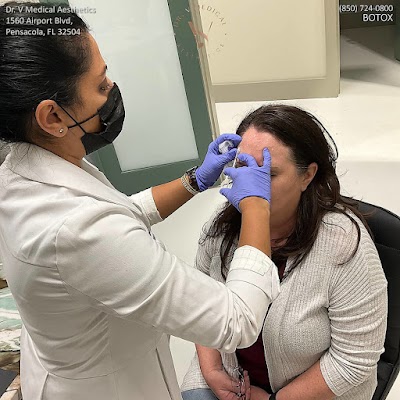
Cheeks and malar area. A fanned, overlapping pattern radiating from the mid-cheek toward the nasolabial fold and up toward the zygoma can even out pore distribution and reduce crêpiness. I avoid heavy density near the lower eyelid unless the dermal thickness supports it.
Jawline and marionette zone. Short, parallel lines along the mandibular border can furnish subtle firming. If sagging is primary, pairing with light barbed pdo threads for facial lifting is more efficient than saturating with smooth threads alone.
Perioral and smile lines. Short intradermal threads placed perpendicularly to movement creases help soften fine lines over time. This is not an instant fix, yet over three to six months, lipstick bleed lines tend to relax.
Under-chin and submental area. Pdo thread under chin work is sensitive because the skin is thin and vascular. I prefer a conservative grid with smooth threads, sometimes supported by deoxycholic acid or energy-based treatments if fat pads are present. For a double chin with good skin, debulking first, then threading, often looks cleaner than the reverse.
Neck. Pdo threads for neck rejuvenation require a gentle hand. Horizontal necklace lines can be traversed with short smooth threads. Vertical banding belongs to muscle activity, so threads alone will not erase it. Combining with neuromodulators for platysmal bands yields a better outcome.
Brow and under eye. Pdo threads for brow lift with barbed threads can open the eye area, but for texture beneath the eye, the margin for error is narrow. Only consider in thicker lower eyelid skin, with fewer and smaller threads, and avoid patients prone to edema.
Step-by-step flow in the treatment room
- Photography and planning. Mark vectors with a cosmetic pencil. Confirm target areas while the patient is upright to read true droop and pore highlight. Prep and anesthesia. Antisepsis first. For texture work, I use topical lidocaine and small blebs of local anesthetic at entry points. Avoid overanesthetizing because it distorts tissue. Thread placement. Through a series of micro-entry points with fine needles or cannulas, smooth threads are advanced and laid at a consistent depth. Each pass should track smoothly with minimal resistance. Contouring and checks. Once placed, I gently contour the skin to ensure threads sit flat. Palpation should feel like a fine, even plane, not a string or lump. Finish and cooling. Entry points are coated with antibiotic ointment. Cool compresses minimize post-procedure swelling and reduce the risk of hematoma.
That is the essence of pdo thread procedure steps for rejuvenation. It is calmer than a lifting session with cogs, yet it still requires precision. The art lies in doing enough to stimulate collagen while keeping the surface unremarkable to the naked eye within days.
The science inside the skin
Why does a 29 to 32 gauge filament change texture months later? The answer lives in the body’s response to foreign-yet-biocompatible material. PDO is hydrolyzed over four to six months on average. During this window, controlled inflammation recruits fibroblasts that deposit type I and III collagen along and around the thread. Neovascularization improves local nutrient delivery. Elastin production rises modestly. The end result is a more robust dermal matrix that resists deformation and sags less under daily expression.
Pores are adnexal openings. We cannot stitch them shut. What we can do is stiffen the dermal wall so that the surrounding architecture holds its shape under oil flow and muscle movement. Better collagen support turns a sharp-edged oval into a softer, less reflective opening. On macro photography, this shows up as an even texture gradient rather than islands of shine and shadow.
Recovery: what the next two weeks feel like
Most patients describe a tightness that peaks the day after and softens over three to five days. Mild swelling and small bruises at entry points are common. Makeup can usually be applied after 24 hours if the skin is calm, though I prefer 48 hours for those with sensitive skin. Sleeping with the head elevated helps. Avoid heavy facial massage for a week. Skip saunas and hot yoga for a few days, since heat amplifies swelling.
When pdo thread therapy includes lifting threads, expect more tenderness and chewing sensitivity for several days, sometimes a week. For pure rejuvenation with smooth threads, the pdo threads recovery time is briefer. It is normal to feel small ridges where threads were laid for a week or two, especially in thin skin, but these settle as fluid disperses and collagen begins to form.
Results timeline, durability, and maintenance
PDO threads results take patience. At two weeks, swelling has receded and the surface is usually back to baseline. From weeks four to eight, subtle changes appear, often noticed first in mirror lighting where pores used to glint more harshly. By three months, the improved texture is evident in photos. The gains typically hold for nine to eighteen months, with individual variation based on age, sun exposure, smoking status, and skincare.
I often recommend a booster session at six to nine months for those aiming at sustained texture refinement, using fewer threads targeted to the areas that lag. Think of it like repainting high-traffic sections of a wall rather than the entire room. Patients who pair pdo thread tightening treatment with nightly retinoids, daily sunscreen, and intermittent energy-based refreshers see the longest runway.
Combining PDO threads with other tools
No modality should work in isolation if comprehensive rejuvenation is the goal. I think of pdo thread aesthetic treatment as the structural piece in a texture plan. Microneedling, fractional laser, or light chemical peels handle surface turnover and pigment irregularities. Neuromodulators quiet dynamic creasing that frays collagen. Hyaluronic acid fillers restore scaffolding in volume-deficient regions. Biostimulators like calcium hydroxylapatite or poly-L-lactic acid can complement threads in thicker skin that needs pronounced collagen remodeling, though timing and dilution matter.
Anecdotally, spacing energy-based devices two to four weeks before or after thread placement plays better than same-day stacking. You want the dermis focused on one controlled injury at a time, not a cacophony.
Benefits that patients value
The benefits patients report are consistent. Makeup sits better. Selfie lighting feels kinder. The cheeks reflect light as a sheet instead of a quilt. There is a subtle, natural lift even without barbed threads, owed to firmer skin rather than displacement. pdo threads for wrinkles at rest can help when the line is etched by collagen loss, though deep dynamic lines still respond best to neuromodulators. For the jaw, pdo threads for jawline definition work best when partnered with fat reduction if needed and a small number of lifting threads to guard the angle.
A realistic expectation set is everything. A pdo threads cosmetic procedure for texture is about the 10 to 30 percent improvement that accumulates quietly rather than the 70 percent overhaul that surgery delivers.
Risks, side effects, and how to avoid trouble
PDO thread side effects are usually limited and short-lived. Bruising, swelling, tenderness, and occasional rippling or puckering are expected in the first week. Infection is pdo threads near Orlando, FL rare but serious, which is why sterile technique is non-negotiable. Thread visibility or palpability can occur in thin skin or with superficial placement. Asymmetry happens if one side is more aggressively treated or swells more.
There are less common complications. Thread migration, dimpling that persists beyond a few weeks, salivary duct irritation near the cheek, or temporary numbness if a sensory branch is irritated. Vascular events are significantly rarer than with filler, yet intravascular placement is not a risk here when using blunt cannulas and mindful depth. For patients with autoimmune conditions, I discuss the theoretical risk of prolonged inflammation and decide case by case.
Technique prevents most issues. Respect depth, dilute anesthesia, avoid overfilling an area with too many passes, and plan vectors that harmonize with facial movement. When puckering occurs, a gentle massage can release it. Palpable ends can be trimmed if they tent the skin. Early infections respond to antibiotics, warm compresses, and drainage if needed.
Cost, value, and when to save your money
A pdo threads treatment cost that targets texture sits below a full lifting package yet still reflects skill and time. Smaller zones with smooth threads might cost 400 to 800 dollars. Full-face texture work can range 1,000 to 2,000 dollars depending on thread count and practice setting. When adding pdo thread lifting procedure elements, expect the total to rise proportionally.
Who should skip? If pore size is your only concern and oil production is high, start with retinoids, peels, and possibly laser. If laxity is significant with deep jowls and neck bands, pdo threads non surgical facelift approaches may not suffice, and surgical consultation is honest advice. If budget allows only a single quick fix, prioritize sun protection and retinoids over threads. The base you build with daily habits amplifies any professional treatment.
Comparing PDO threads to other collagen stimulators
Each biostimulator has pdo thread clinics Orlando, FL a signature. PDO threads are linear scaffolds that offer mechanical support while stimulating collagen along defined tracks. Calcium hydroxylapatite, when hyperdiluted and injected, spreads a field of stimulation and is excellent for crêpe skin on arms and lower face. Poly-L-lactic acid excels at deep volumetric stimulation over months but requires a series and careful massage to avoid nodules. Microneedling and radiofrequency microneedling create micro-columns that are more diffuse than a thread lattice. None is inherently better, only better matched to a goal and skin type.
For pores and fine crêpiness, smooth PDO threads deliver tactile firmness that many patients feel is unique. For diffuse sun damage on the neck, hyperdiluted biostimulators might edge them out. The sweet spot often lives in a combination plan spread over quarters, not days.
What to expect from a first appointment
New patients often arrive nervous about pain and visibility. With topical and local anesthesia, discomfort is manageable, described as pressure and brief stinging at entry points. The treatment itself can be 30 to 60 minutes depending on areas treated. You walk out a bit puffy, sometimes with tiny marks that look like insect bites. Most people return to normal activities the next day, though public-facing events are safer after three to five days.
Plan your calendar. Book the pdo thread appointment at least two weeks before photos, weddings, or travel. If you bruise easily, consider arnica and avoid blood thinners like aspirin for several days ahead if your physician agrees. Hydrate well. Bring photos that illustrate your texture goals, not someone else’s bone structure.
Realistic outcomes across different ages
In the early thirties, pdo threads for facial rejuvenation treatment can feel preemptive. Results skew toward prevention and subtle pore refinement. In the forties, especially with early laxity at the jawline, combining pdo thread tightening therapy with a conservative lift thread strategy pays dividends. In the fifties and beyond, success depends on skin thickness, cumulative sun exposure, and whether volume and muscle activity are addressed. It is never too late to improve texture, but the path will involve more tools.
Gender, ethnicity, and skin biology contribute. In thicker, oilier male skin, more threads or adjunct energy are needed to move the needle on pores. In melanin-rich skin, energy modalities must be chosen carefully to avoid pigment disturbance, which nudges PDO threads and biostimulators higher in the order. In delicate, freckled skin that bruises readily, planning for downtime and gentle technique matters more than the exact thread count.
The quiet gains you can measure
I like measurable checkpoints. Macro photos at baseline, three months, and nine months. A pinch test along the cheek to feel dermal thickness. Makeup wear time without separation in the T-zone. Even anecdotal markers help. Patients tell me their phone’s beauty filter feels redundant. They wear less foundation. They feel less compelled to blur their photos.
That is the real mark of success for a pdo thread cosmetic facial lift aimed not at pulling but at polishing. The camera reads a smoother field, and the person wearing the skin feels less need to camouflage.
A brief checklist for choosing the right provider
- Ask whether the plan prioritizes smooth threads for collagen stimulation or barbed threads for lifting, and why that choice fits your goals. Request to see pdo threads before and after photos of patients with similar skin texture and pore visibility. Confirm the provider’s approach to asepsis, anesthesia, and aftercare, and how they handle complications if they arise. Discuss a one-year plan, not a one-day fix, including skincare and any adjunct treatments. Get a clear pdo threads treatment cost estimate that matches the scope of work.
Final thoughts from the treatment chair
PDO threads, used for skin support rather than drama, deliver on a narrow but valuable promise. They give your collagen a path to follow. They nudge the dermis from slack and light-scattering to firm and light-smoothing. They do not rewrite bone structure, erase every fold, or halt time. They are best when they respect the way your face moves and ages.
If your mirror complaints center on how makeup sits, how pores read on camera, and how your cheeks wrinkle when you smile, a pdo thread skin rejuvenation procedure is worth a thoughtful conversation. Map the vectors to your goals. Time the treatment to your life. Let the results come in on their schedule, not yours. Months from now, you will notice you changed nothing about your expression, yet it looks more like you rested well and drank enough water. That is collagen doing quiet work behind the scenes, and that is where PDO threads earn their place in modern, non surgical treatment plans for natural-looking, younger looking skin.